Sculpture
With their workshop nestled in the wilds of Dorset, Francis’ team enjoys an idyllic outlook which surely feeds into their creativity. We chatted with Francis and AJ to learn more about the process of bringing the Ovington Table Lamp’s bird to life. Central to the lamp design is the little bird that perches atop, adding a sense of nostalgia to the table light. To start with, the team used inspiration images of various small, garden birds and developed a universal ‘stylised’ bird.
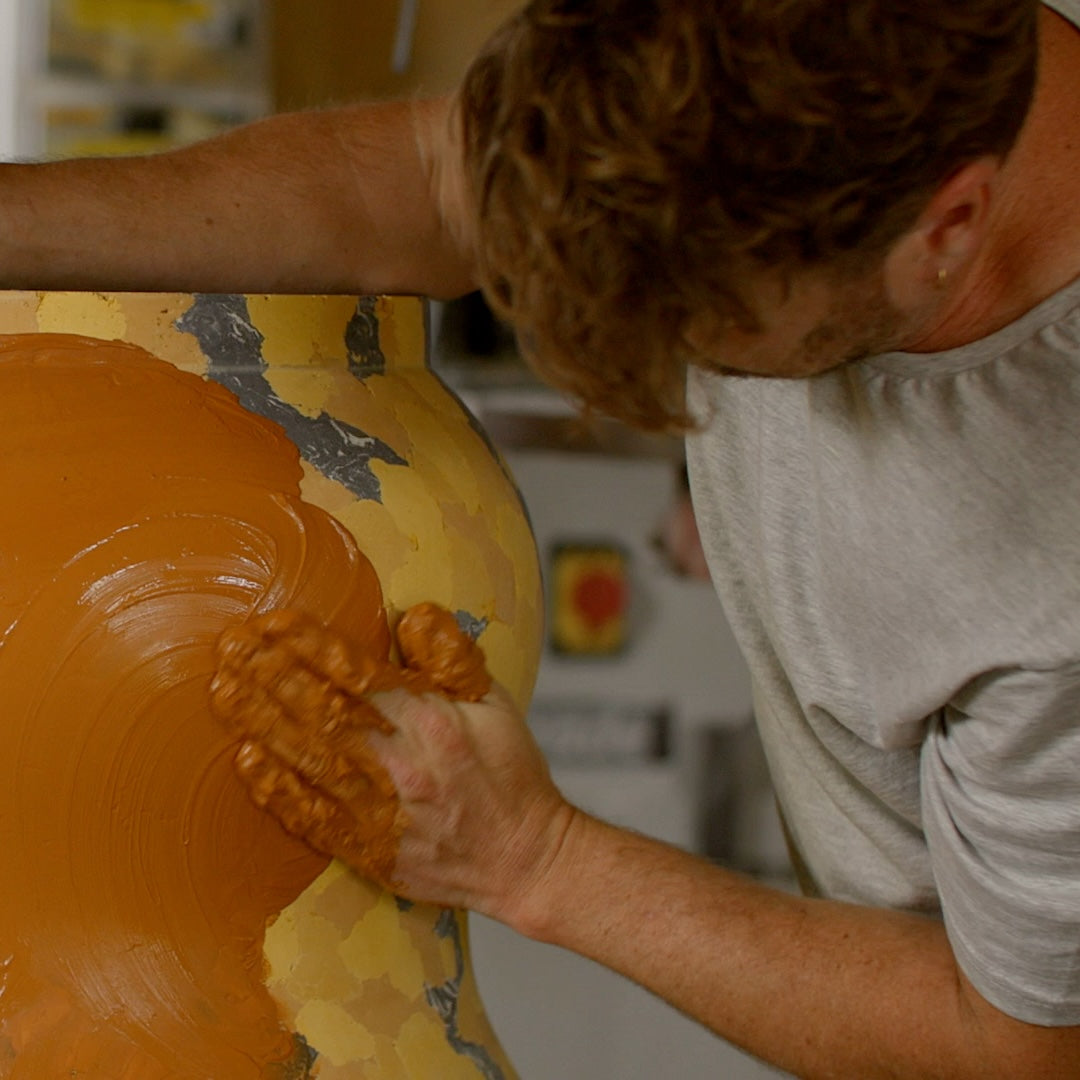
Using a synthetic clay - "traditional pottery clay would dry too quickly making it hard to shape" Francis notes - AJ creates a negative impression casting of the sculpted the bird using a silicone mould. The silicone mould is used to make a wax copy of the clay original, the waxes are inspected and perfected as they form the shape to be cast within a plaster mould.
The mould with the wax in is then fired in the kiln to run the wax out, so the now hollow ‘investment’ mould is ready to receive the molten bronze at around 1,120 degrees centigrade. The FRD team uses recycled silicone bronze in this instance, a non ferrous material which performs well with jewellery and small detailed casting. Once cooled, the plaster investment is broken off to reveal the little bronze bird. The process of making the bird takes several days, with the kiln firings, furnace work and fettling and polishing, prior to having the silver finish applied.